
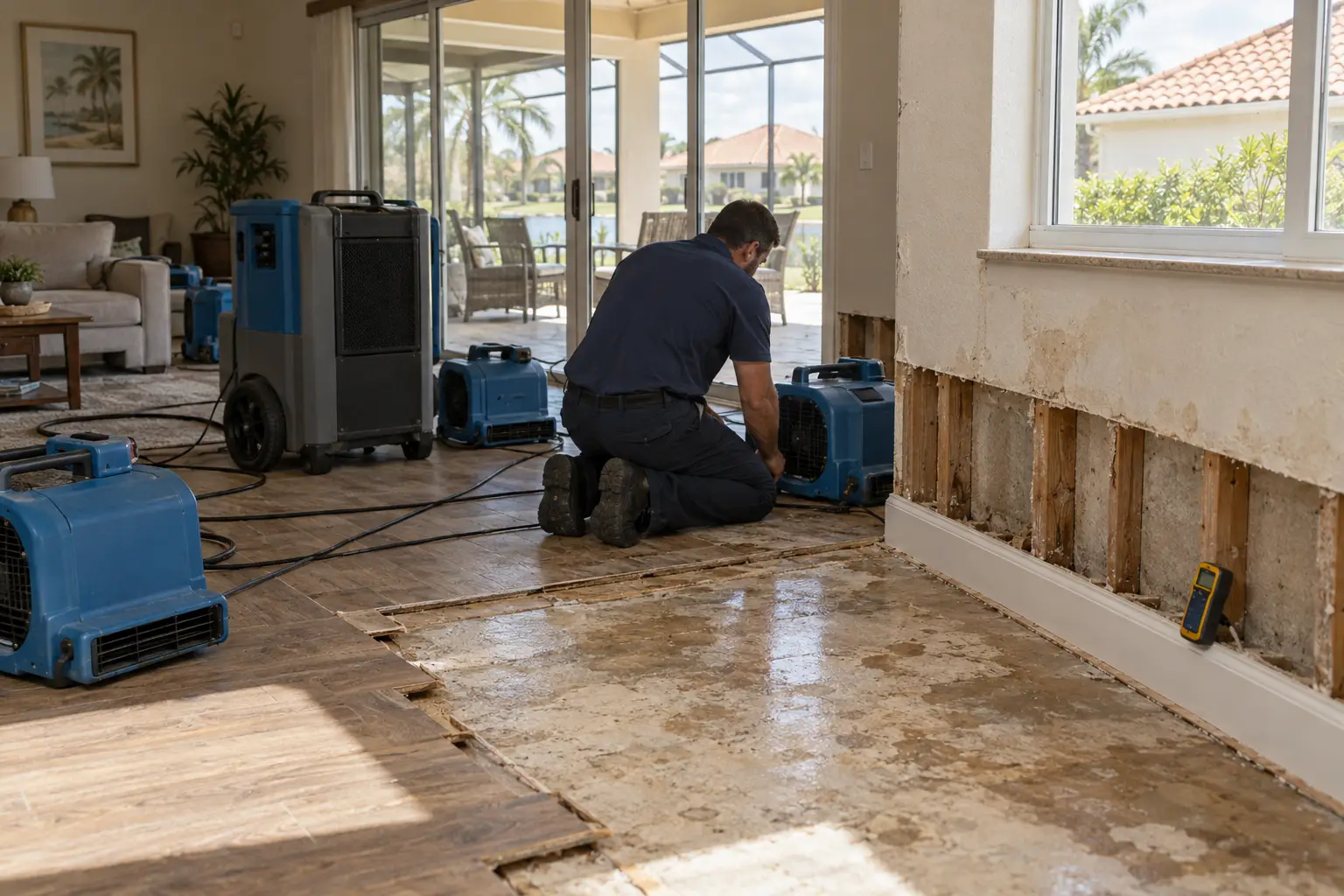
TL;DR: Water extraction takes hours. Drying a clean-water leak that was caught early often takes about 3 to 5 days. Floodwater, sewage, mold, overhead leaks and wet concrete slabs all add time. Rebuilding is a separate phase that starts only after moisture readings show the structure has reached a dry standard.
Water damage restoration usually takes anywhere from a few days to a couple of weeks. It depends on what got wet and what kind of water it was. Pulling out standing water takes hours. Drying a clean-water leak that was caught early often takes 3 to 5 days. Floodwater, sewage, mold or a soaked concrete slab will add time. Rebuilding is a separate job that starts once everything is dry.
Finding water under a sink or coming through a ceiling is stressful. Most people want to know two things right away: is the house safe, and how long does water damage restoration take? Below we explain what sets the timeline in a Central Florida home, so you can plan your week, talk to your adjuster and line up your contractor.
What decides how long the drying takes?
Four things set the timeline: how dirty the water is, how much water the building soaked up, what materials got wet, and how long the water sat before drying started.
Restoration crews use the IICRC S500 standard for professional water damage restoration to sort every job two ways. The category tells you how contaminated the water is, from clean (Category 1) to grossly contaminated (Category 3). The class tells you how hard the job is to dry, from Class 1 to Class 4. A trade article from R&R magazine explains that Class 4 jobs involve dense materials like hardwood, plaster and concrete, and those can need longer drying times and special methods.
Time matters most. The EPA advises drying water-damaged areas within 24 to 48 hours to prevent mold. Once you are past that window, a drying job can turn into a mold job, and that means more steps and more days.
How long does water damage restoration take for common Florida leaks?
For most household leaks, drying runs a few days. Contaminated water or water that sat too long adds removal work before drying can even start. Here is how common Central Florida situations usually play out.
| Situation | Water type | What usually has to happen | Effect on the timeline |
|---|---|---|---|
| Burst supply line or water heater, caught the same day | Clean (Category 1) | Extract water, pull baseboards, dry walls in place if the drywall is not swollen | Shortest. Often about 3 to 5 days of drying |
| AC condensate overflow found days later | Clean at first, but it sat | Remove wet drywall or cabinet toe kicks, treat with antimicrobial, deal with any mold | Longer. Mold work adds containment and removal |
| Leak from the condo unit above | Usually clean, but it came from overhead | Wet ceiling drywall and insulation often come down, then walls below get dried | Longer than a floor-only leak. May involve two units |
| Hurricane floodwater or sewage backup | Grossly contaminated (Category 3) | Porous materials the water touched come out, then the structure is cleaned and dried | Longest. Removal comes before drying starts |
The EPA’s cleanup guidance says drywall may be dried in place if there is no obvious swelling and the seams are intact. That one check often decides whether a wall gets dried or cut out, and that changes the schedule.
Why can drying take longer in Groveland-area homes?
Central Florida’s heat and humidity work against drying, and the way local homes are built adds to that.
- Mold can start within 24 to 48 hours of a leak in our climate, so the clock starts the moment water shows up.
- Most homes here are slab-on-grade with drywall walls. Water wicks up the drywall and soaks under baseboards, so a wet floor usually means wet walls too.
- Concrete slabs hold water and give it up slowly. That puts a lot of floor-level losses into the harder-to-dry category.
- AC condensate lines clog and overflow in summer. They often leak slowly behind an air handler or cabinet for days before anyone notices.
- Condos and townhomes often take water from the unit above, which means wet ceilings plus wet walls.
- Hurricane season runs June 1 to November 30. Storm water and floodwater are dirtier than a pipe leak, so more material has to come out.
A slab home in Groveland, a two-story in Clermont and a townhome in Poinciana can all have the same burst pipe and still need different drying times. It depends on how far the water traveled and what it soaked into.
What happens on each day of a typical job?
Most clean-water jobs follow the same basic rhythm. Contaminated or moldy jobs add steps.
- First few hours: Stop the water source (a plumber handles the repair), then extract the standing water.
- Day one: Map the moisture with meters and thermal imaging. Remove materials that cannot be saved. Apply antimicrobial where needed. Set up commercial dehumidifiers and air movers.
- Middle days: Take moisture readings every day and move or adjust equipment as areas dry.
- Final day: Readings reach the dry standard. Equipment comes out, and the readings and photos go into the claim file.
- After that: Your contractor rebuilds. That timeline depends on the contractor and the materials.
For more detail on what happens at each stage, see our guide on the water damage restoration process, step by step.
How do you know the drying is really finished?
The drying is done when moisture readings show the materials have reached a dry standard. A surface that feels dry is not proof. Wall cavities and slabs can stay wet long after the paint feels dry.
Signs the job is not finished yet:
- Equipment is pulled on a set day instead of after the readings say the materials are dry
- Nobody has taken or written down moisture readings
- A musty smell shows up a few days after the fans are gone
- Baseboards or the bottom of the drywall feel soft or look swollen
- Paint is bubbling, or stains are creeping up the wall
- Tile is lifting, or wood or laminate flooring is cupping
If you see any of these, have the area checked again before anyone closes up walls or puts in new flooring.
Why work with EnviroTech Solutions on a water job?
EnviroTech Solutions is a family-owned water damage restoration company based at 15380 County Road 565A, Suite E, in Groveland. The team answers the phone 24/7, holidays included. Its technicians are IICRC-certified, and the company is licensed and insured. It also holds Florida mold remediation license MRSR4759, so if a slow leak has already turned into mold, the same team can handle both. Drying is checked with moisture meters, thermal imaging and daily readings. EnviroTech works with all major insurance companies and documents everything for the claim. The crew removes damaged materials and dries the structure, then your contractor rebuilds. The company has a 5.0-star Google rating from 41 reviews. After an AC leak that caused damage and mold, one customer, Paula, wrote that Rob and his team did a phenomenal job clearing it all out to start reconstruction.
If you have water in your home or building right now, call 321-758-9787 any time, day or night, or request a water damage estimate online.
Frequently Asked Questions
Why do the dehumidifiers and air movers have to run day and night?
Drying only works when wet air keeps getting pulled out of the room. If the equipment is shut off overnight, the humidity climbs back up, which happens fast in Central Florida, and the job takes longer.
Can I stay in my house while it dries?
Many people stay home during a small clean-water dry-out, though the equipment is loud and runs nonstop. With sewage or floodwater, keep people and pets out of the affected areas until they have been cleaned.
How soon does mold become a concern after a leak in Florida?
In Central Florida’s heat and humidity, mold can start within 24 to 48 hours of a leak. That is why getting water out and drying started quickly matters more than almost anything else.
Does waiting on the insurance adjuster slow down water damage restoration?
Usually it should not. Most policies expect you to take reasonable steps to stop further damage, so extraction and drying can start while photos and daily moisture readings are kept for the adjuster.
Is the rebuild included in the restoration timeline?
No. EnviroTech Solutions removes damaged materials and dries the structure. A separate contractor handles the rebuild, and that schedule depends on the contractor and the materials.