
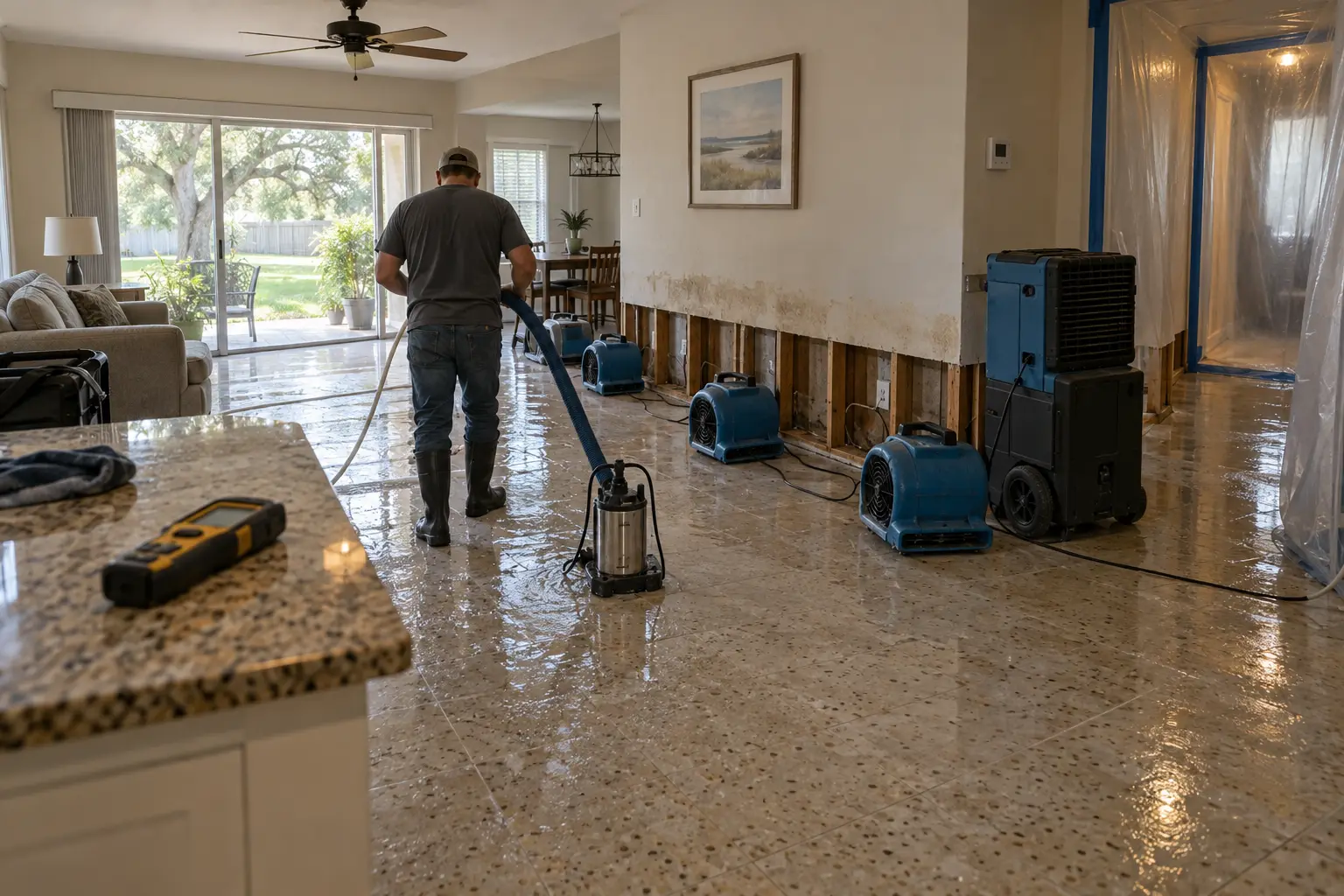
TL;DR: Water damage restoration has six steps: stop the source, inspect and classify the water, extract it, remove materials that can’t be saved, treat and dry the structure, and check moisture every day until materials are dry. In Central Florida’s heat and humidity, mold can start within 24 to 48 hours, so you need to move fast. Good photos and drying logs help your insurance claim.
The water damage restoration process has six main steps. First the water is stopped. Then it is checked and classified, the standing water is pulled out, and materials that can’t be saved are removed. The structure is dried with commercial equipment, and meter readings confirm when it is dry. In Central Florida, mold can start within 24 to 48 hours, so timing matters.
Finding water across your floor is stressful. It helps to know what the crew will do and why. Here is how a typical job goes for a home or business in Groveland and nearby towns like Celebration, explained the way we would explain it on site.
What are the steps in the water damage restoration process?
Most jobs follow the same order. The industry’s consensus standard, the ANSI/IICRC S500, sets out the procedures and precautions for this work in homes, businesses and institutional buildings.
- Stop the source. Shut off the water at the main or at the fixture. A plumber, roofer or AC technician fixes the actual leak. The restoration crew deals with the water and the drying.
- Inspect and classify. Technicians use moisture meters and thermal imaging to track where the water went, including behind baseboards and under cabinets. They also sort the water into one of three categories: clean (Category 1), gray (Category 2) or black (Category 3). Sewage and rising floodwater are Category 3.
- Extract standing water. Extraction equipment removes most of the water. Pulling water out is much faster than waiting for it to evaporate.
- Remove what can’t be saved. Soaked carpet pad, swollen baseboards, wet insulation and drywall that pulled water up from the slab get cut out. This is controlled demolition. It opens the wall so the inside can dry.
- Treat and dry. EPA-registered antimicrobials go on the affected surfaces. Then commercial dehumidifiers and air movers are set up and left running.
- Monitor until dry. Moisture readings are taken and logged every day. The equipment comes out when materials reach a dry standard, not on a set date.
Once that’s done, a contractor can rebuild. EnviroTech Solutions removes damaged materials and dries the structure. It does not do the rebuild.
Why do Central Florida homes need to dry so fast?
Heat and humidity give you less time. The EPA says it is important to dry water-damaged areas and items within 24 to 48 hours to prevent mold growth. Our climate makes that window feel short.
How homes are built here matters too. Most homes are slab-on-grade with drywall walls. When water hits the floor, the drywall soaks it up like a sponge and it spreads under the baseboards, often farther than you can see. In a slab home in Poinciana or Harmony, an AC condensate line that clogs in July can wet two rooms before anyone notices. In condos and townhomes, the water often comes from the unit above, so the damage starts in the ceiling.
Hurricane season runs June 1 to November 30. It brings roof leaks, wind-driven rain and flooding. Floodwater is treated as Category 3. FEMA tells homeowners to remove all drywall and insulation that touched floodwaters.
What gets dried in place, and what gets torn out?
It depends on the material, the water category and how long it stayed wet. Clean water caught early gives you the most options. Dirty water or a long soak means more has to come out.
| Material | Clean water, caught early | Gray or black water, or wet a long time |
|---|---|---|
| Drywall | Often dried in place by pulling baseboards or drilling small holes to vent the wall | Usually cut out above the wet line |
| Carpet and pad | Carpet can sometimes be dried; the pad is often replaced | Removed and thrown away |
| Wall insulation | Usually removed if soaked | Removed |
| Cabinets and baseboards | Solid wood may dry; particleboard often swells and comes out | Usually removed |
| Concrete slab | Dried in place | Cleaned, treated and dried in place |
Older homes need one more check. Buildings from before the 1980s may have asbestos in popcorn ceilings, floor tiles and mastic. A licensed assessor has to test those materials before anyone cuts or scrapes them. If the test comes back positive, EnviroTech Solutions is a Florida-licensed asbestos abatement business and can do the removal.
How long does structural drying take?
Drying takes as long as the moisture readings say it does. A clean-water leak caught quickly often dries in a few days. Wet cabinets, hardwood, or water that sat for a while will take longer.
Dense materials like concrete and hardwood give up water slowly. Daily readings show whether the drying plan is working. If one spot isn’t drying, the crew can move air movers, add a dehumidifier or open up the wall.
A common mistake is shutting the equipment off early because of the noise. Water left in the bottom of a wall or under the cabinets can turn into a mold problem weeks later.
What does insurance usually need?
Your insurance carrier wants proof of what happened, what was removed and why, and that the structure was dried. That usually means photos taken before work starts, the source of the water, moisture maps, daily drying logs, a list of removed materials and the equipment used.
Take your own photos before you move anything, and call your carrier early. Coverage often depends on whether the water came from a sudden event, like a burst supply line, or a slow leak over time, so ask your agent what your policy covers. We work directly with your carrier and document the job for the claim.
Signs you need a pro instead of a shop vac
- Water has been sitting for more than a day.
- Drywall feels soft or baseboards are swelling.
- The water came from a toilet, a sewer line or outdoor flooding.
- Water came through a ceiling or from the unit above.
- You smell something musty or see spots on walls or the backs of cabinets.
- More than one room, or the inside of a wall, is wet.
- The home was built before the 1980s and the damage involves popcorn ceilings or old floor tile.
Why EnviroTech Solutions is a fit
- We are a family-owned company based in Groveland, run by owner Rob Kennedy.
- We answer the phone 24 hours a day, 7 days a week, holidays included.
- Our technicians are IICRC-certified, and the company is licensed and insured.
- We hold Florida mold remediation license MRSR4759, so if mold turns up during tear-out, we can remediate it.
- We use moisture meters, thermal imaging, commercial dehumidifiers and air movers, and we take moisture readings every day.
- We work with all major insurance companies and document everything for the claim.
- We also work with contractors, property managers, real estate professionals and adjusters.
After Hurricane Milton dropped a tree on his house, a customer named Chris wrote: “They went to work and got the house dry.”
If you have water where it shouldn’t be, call 321-758-9787 any time, or request an estimate online.
Frequently Asked Questions
Can I stay in my home during water damage restoration?
Often, yes. If clean water affected only a few rooms, many people stay home while the equipment runs. Sewage, large floods or work in many rooms may mean staying somewhere else until the affected area is safe.
Do I have to wait for the insurance adjuster before drying starts?
Usually not. Most policies expect you to take reasonable steps to stop more damage. Take photos, call your carrier, and keep every record from the drying work.
Why does the drying equipment have to run all night?
Dehumidifiers and air movers work around the clock to pull moisture out of drywall, wood and concrete. Turning them off slows drying and can stretch out the job.
Does EnviroTech Solutions fix the leak or rebuild the damaged area?
No. A plumber, roofer or AC technician fixes the source, and a contractor rebuilds once the structure is dry. EnviroTech removes damaged materials and dries the structure so the rebuild can start.
What if mold is already growing when the crew arrives?
EnviroTech holds Florida mold remediation license MRSR4759 and can remediate mold found during the job. If you need mold testing or a report, a separate licensed assessor does that work.