
We get it. There is a tremendous sense of satisfaction that comes from taking on a project around the house and completing it yourself. As avid DIYers ourselves, we understand the impulse to grab a toolbox and fix a problem as soon as it arises.
However, there is a massive difference between patching drywall and handling a water intrusion event.
When it comes to water damage, what you see on the surface is rarely the whole story. While you might be tempted to set up a few house fans and call it a day, DIY water damage drying is a risk that rarely pays off.
At EnviroTech Solutions, we want to help you protect your home. Before you attempt to tackle water damage on your own, here is why this specific task should always be left to the professionals.
The Hidden Risks of Improper Drying
The biggest misconception about water damage is that if the floor looks dry, the problem is solved.
The transcript of our recent video highlights a critical truth: “Improper drying can lead to mold and other dangers inside the home.”
Water is insidious. It migrates under flooring, wickes up into drywall, and soaks into framing materials. When a homeowner attempts DIY drying, they usually only address the visible moisture. The hidden moisture remains trapped, creating the perfect breeding ground for mold in as little as 24 to 48 hours.
By the time you realize your DIY efforts didn’t work, you are often dealing with a much more expensive secondary damage issue—microbial growth that requires professional remediation.
What You Can’t See Will Hurt Your Home
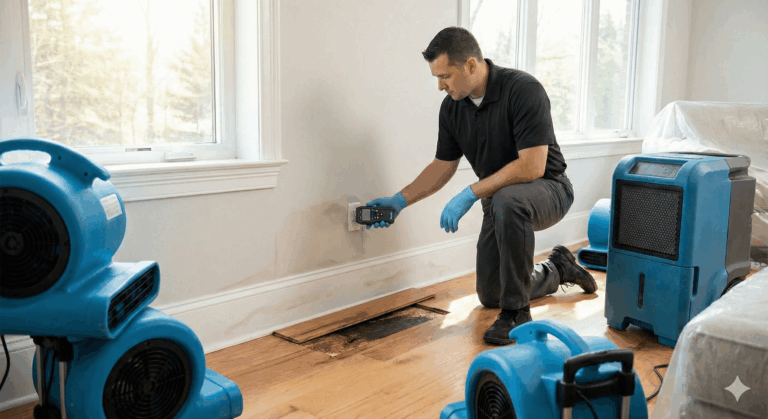
Why are professionals so much more effective at drying a home than a homeowner with shop vacs and box fans? It comes down to specialized training and advanced technology designed to find “those areas of the home that otherwise you wouldn’t be able to see.”
At EnviroTech Solutions, we don’t guess; we verify. We utilize industrial-grade equipment that goes far beyond standard hardware store tools:
-
Moisture Meters: These devices allow us to probe deep into building materials to determine exactly how saturated they are and track drying progress accurately.
-
Thermal Imaging Cameras: By detecting temperature variations caused by evaporative cooling, thermal cameras allow us to “see” moisture hidden behind walls, under cabinets, and beneath flooring without destructive testing.
Don’t Chance It—Call the Pros
You wouldn’t try to rewire your main electrical panel after watching a five-minute video. Treating extensive water damage should be viewed with the same level of caution.
The risks of missing hidden moisture—structural rot, mold growth, or triggering a need for complex cleanups like asbestos abatement—are simply too high.
When disaster strikes, don’t rely on guesswork. Trust the experts who have the right tools and experience to ensure your home is truly dry. Contact EnviroTech Solutions today at 321-758-9787.